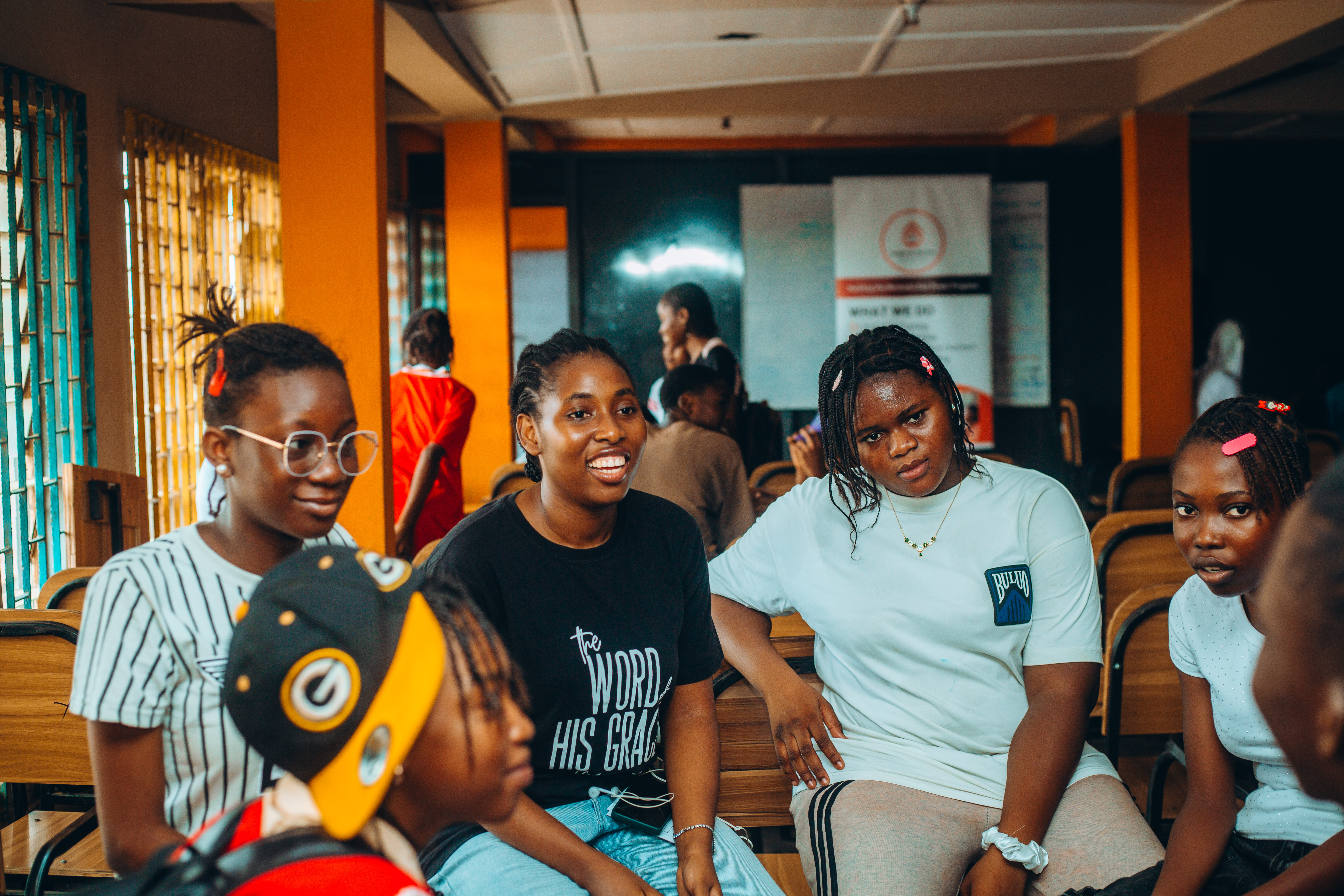
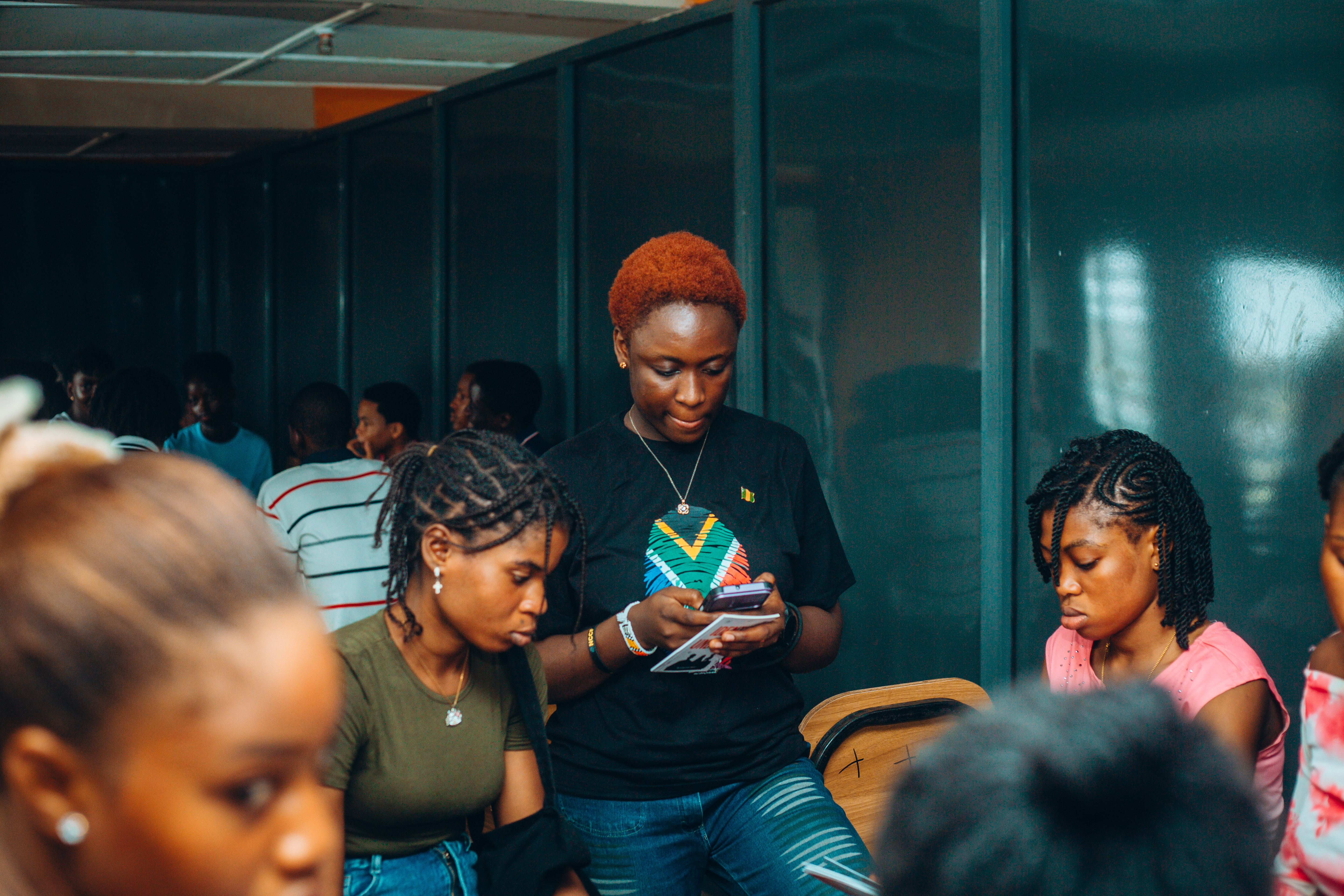
As the impact of AI and disruptive technology grows, candidates who can perform tasks that machines cannot, are becoming more valuable.
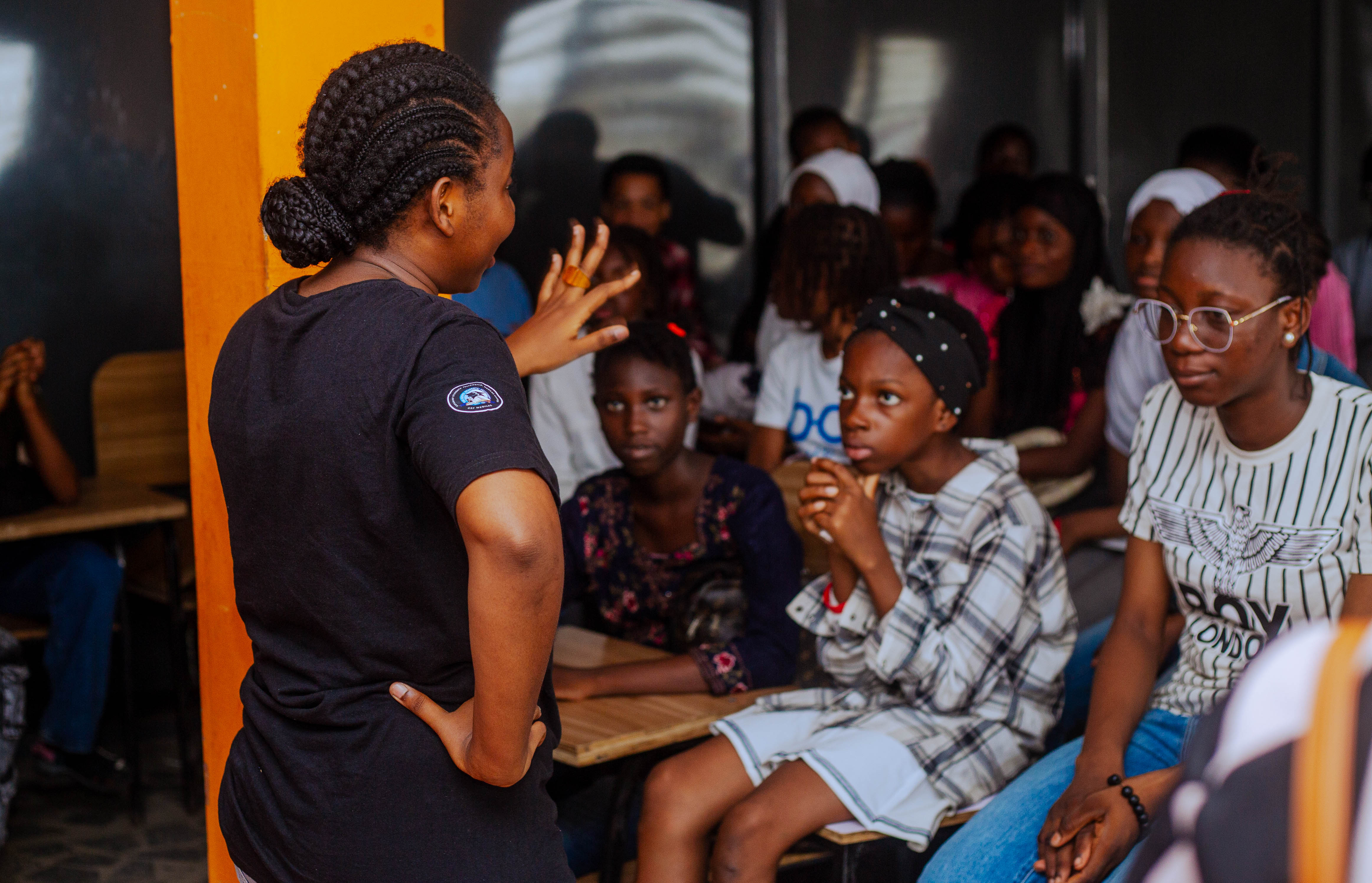
85% of job success comes from well-developed soft and people skills and only 15% comes from technical skills.
Harvard University, Carnegie Foundation & Stanford Research Center

About Us
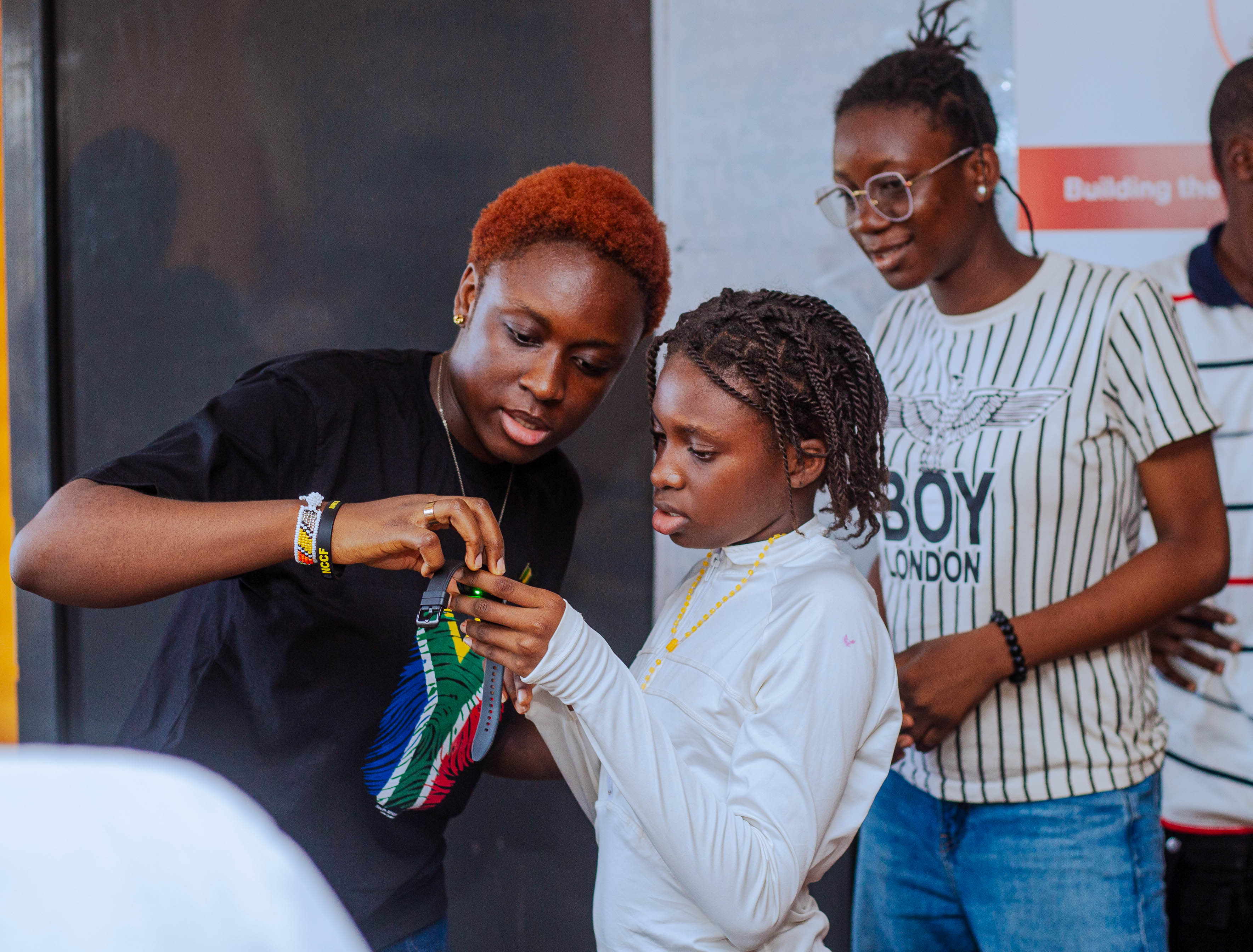
ATGI is a social intervention organization invested in the habits of mind that shape behavior, leadership, and collective outcomes. We exist because many of Africa’s most persistent challenges are reinforced by gaps in thinking, behaviour, and interpersonal discipline.
Long before policy fails or institutions weaken, everyday reasoning does. When people struggle to articulate ideas, evaluate consequences, or engage constructively with others, those limitations compound across communities and surface in our systems.
We address gaps in thinking that shape behaviour and decision-making.
We strengthen interpersonal discipline and leadership capacity.
We design interventions grounded in real social conditions.
Intervention Framework.
We re-engineer behavior through in-demand soft skill trainings.
We connect young people with experienced guides for real-world growth.
We build networks that enable shared learning, collaboration and access to opportunity.
Evidence snapshots that show why soft skills development is urgent across education, work, and social mobility.

In 2025, a study of 1,096 senior secondary students in Nigeria’s Bayelsa State found a strong positive correlation between communication, teamwork, self-discipline, flexibility, problem-solving, and Mathematics performance. Students who demonstrate stronger soft skills perform better academically; how students think shapes how they learn.
Oribhabor, C. B. (2025). Faculty of Natural and Applied Sciences Journal of Mathematics, and Science Education.

A 2021 study published in the Global Journal of Educational Research found that most teachers lack adequate knowledge of how to integrate soft skills into teaching, making structured professional development a necessity, not an option. Educational leaders recognise this but because systems rarely act on it, the result is a persistent gap between what we value and what we actually teach.
Global Journal of Educational Research (2021).

A 2019 multi-country review under the Africa Development Forum series argues that sub-Saharan Africa’s skills agenda must extend to include socio-emotional skills that support productivity, inclusivity, and adaptability. Over 300 million workers (80–90% of the region’s workforce) cannot achieve economic transition without these skills.
Arias, Evans & Santos (2019). Africa Development Forum series.

The World Economic Forum Future of Jobs Report 2025 shows a sharp rise in the importance of leadership, social influence, resilience, agility, curiosity, and lifelong learning compared to 2023. The Kenya Human Rights Commission noted that with only 20 internship slots available annually, critical thinking is a primary selection criterion.
Assan, Nalutaaya (2018). Africa’s Youth Unemployment Challenge and the Pursuit of Soft Skills Development by University Students.

Research on entrepreneurship education across Africa shows that initiative, persistence, opportunity recognition, and communication strongly shape entrepreneurial readiness among aspiring South African entrepreneurs. Technical knowledge alone is insufficient as enterprise formation depends on judgment, resilience, and human interaction.
Simba, Tajeddin, Jones & Rambe (2025) Journal of Small Business Management.

In Morocco, researchers embedded collaborative storytelling into existing secondary-school lesson plans and achieved a 90% success rate, despite limited resources and diverse social backgrounds represented.
Lambert, DC (2023). Journal of Educational Research and Practice.

Anthropologist Aomar Boum warns that deficits in personal communication disproportionately advantage already-privileged groups, reinforcing social stratification rather than mobility. As global economies integrate, immigrants and marginalized populations increasingly seek participation without equal access to the skills required to navigate them. Neglecting soft skills deepens inequality and hardens exclusion. To ignore these skills is an equity risk.
Lambert, DC (2023). Journal of Educational Research and Practice.
Mediocrity brings obliteration.
Setbacks are data for growth.
Ubuntu; I am because we are.
ATGI directs mindset development to narrow disparities and help Africans prepare for social, civic, and economic life.
Delivering soft-skills education and mentorship, advancing Target 10.2 and aligning with Indicator 10.2.1.
Strengthening young people’s confidence, voice, and participation, advancing Target 10.3 and connecting to Indicator 10.3.1.
ATGI addresses the human foundations of peaceful and effective institutions for Africans to participate in global decision-making.
Driving trainings to reduce susceptibility to destructive behaviour, supporting Target 16.1 and linking to Indicator 16.1.4.
Creating spaces for dialogue and shared decision-making, advancing Target 16.7 and relating to Indicator 16.7.2.
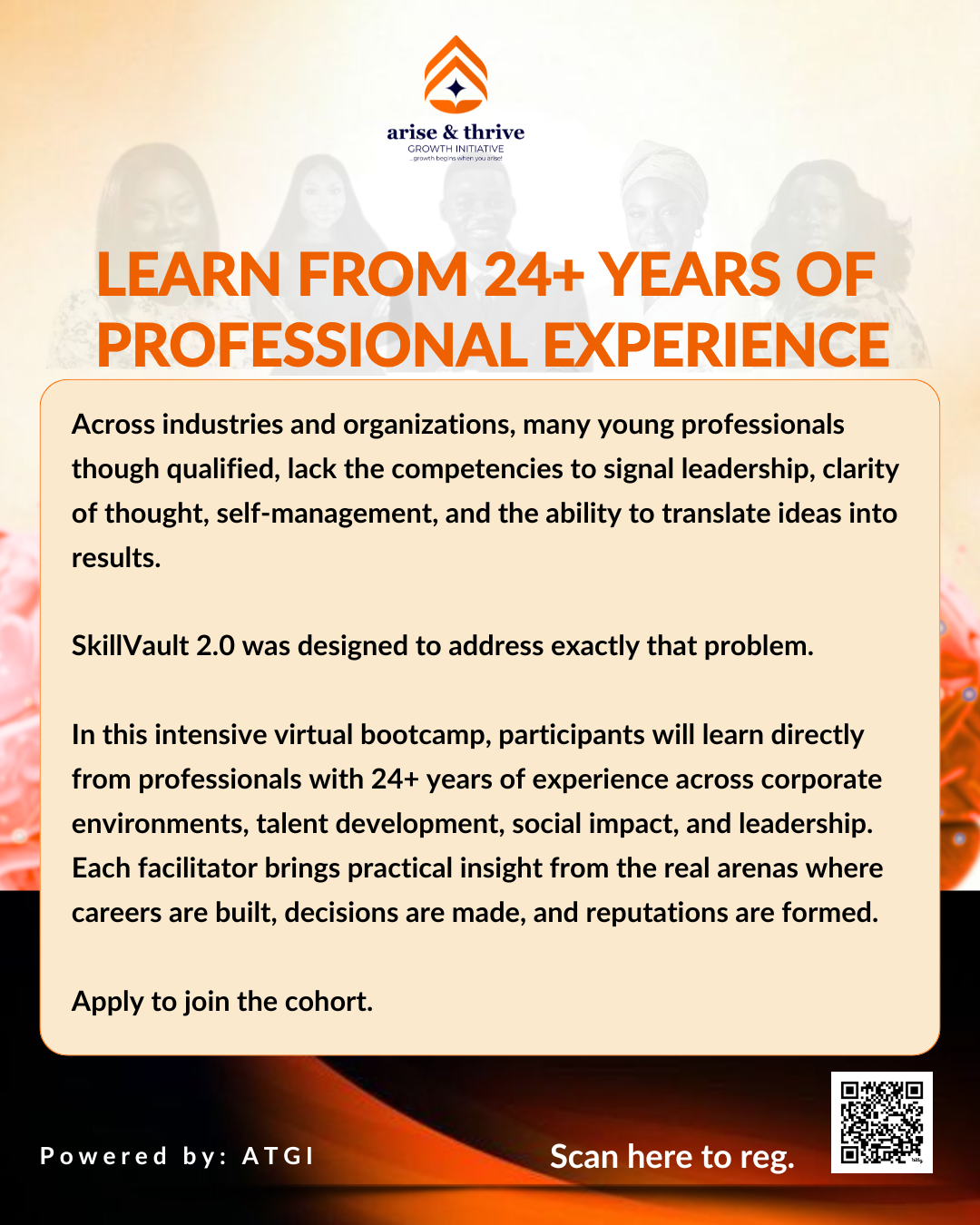
Now Open
Applications are now open for the next SkillVault cohort.
If you want structured, application-focused soft-skills training that strengthens communication, leadership, emotional intelligence, and professional readiness, this is the section to start from.

I had never been the type who loved to face a crowd; stage fright was my major issue. SkillVault re-engineered my mindset. After the Communication Module, I became a better communicator. Now, I handle overbearing clients with emotional intelligence, not impulse.

As an engineer, I focused heavily on code. But SkillVault taught me that communication is incomplete until the receiver understands the message. The sessions on Active Listening and Emotional Intelligence have completely changed how I collaborate in my team.

Networking used to be a challenge, but SkillVault forced me to be intentional. I connected with a LinkedIn Tech enthusiast during the program, and we are already discussing future collaborations. This program bridges the gap between theory and industry.

I learned to be self-aware of my moods to best manage my emotions. Before SkillVault, I reacted. Now, I listen, reflect, and respond. The Growth Mindset module has directly improved my personal development and career focus.
SkillVault taught me how to lead when things go wrong. When my team was not showing up, instead of complaining, I learned to reach out individually to understand their challenges. That is the "People Agility" skill I gained here.

The class on Emotional Intelligence was my turning point. I learned that you do not "talk" to anger; you feel it and manage it. This specific lesson on self-regulation has saved me from so many impulsive decisions.
I did not even know what "CC" and "BCC" meant in emails until the Email Writing session! It sounds small, but SkillVault saved me from professional embarrassment before I even started my career. Also, the Communication Skills facilitator assignments made me take long videos of myself (something I never do). Thank you for that!

Consistency and Determination are 2 key things I have applied practically since the bootcamp. No matter how bad my day went or how things did not work out for me, I always show up! I study before coming to class because of what I learned about lifelong learning.
HQ: Haze Water Estate, Ilisan-Remo, Ogun State (Operational HQ) | Ikeja, Lagos (Liaison Office)
info@atginitiative.com
Monday - Friday
Saturday
Sunday